Why does bipolar disorder take years, or sometimes decades to diagnose accurately? And what if artificial intelligence could change that?
AI researcher and mood disorder psychiatrist Dr. John-Jose Nunez breaks down the hidden challenges behind bipolar diagnosis and explains how AI could reshape the way we diagnose bipolar disorder. By uncovering new patterns, AI may help doctors see what’s been overlooked – earlier and more accurately than ever before. But how close are we to that reality, and what are the limits?
0:00 AI Is Changing How Doctors Diagnose Bipolar
3:16 How Accurate Is AI? Doctors vs AI
6:50 Human-in-the-loop
9:15 Will AI Replace Psychiatrists?
Bipolar Explained is a new #talkBD series spotlighting expert perspectives on the history, biology, and management of bipolar disorder.
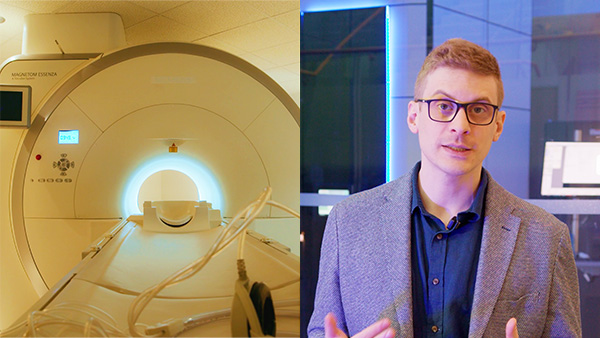
Dr. John-Jose Nunez is a psychiatrist and clinical researcher whose work bridges psychiatry and computer science, with a focus on using computational approaches including artificial intelligence, machine learning and natural language processing to improve mental health outcomes. He holds an MD and MSc in Computer Science from UBC, and is a Fellow of the Royal College of Physicians of Canada (Psychiatry). Dr. Nunez is an Assistant Professor at the University of British Columbia, a member of the CREST.BD network, and serves as the Associate Medical Director of Supportive Care at BC Cancer.
His research aims to use computational methods like artificial intelligence to help patients with mood disorders such as bipolar disorder and depression, and patients experiencing both cancer and mental illness. His thesis work has led to two high-profile publications in JAMA Network Open and Communications Medicine, which garnered international media coverage. His work has been supported by the UBC Institute of Mental Health and the BC Cancer Foundation.
More on Dr. Nunez: https://nunezlab.ca
Related Posts

The Biggest Bipolar Disorder Event on the Internet For over 48 hours on Monday, March 30th 2026, the CREST.BD network will host the 8th annual…



 Back to Blog
Leave a Reply